


WAKE UP CALL FOR CONSERVATIONISTS
- Jul 30, 2018
- 3 min read

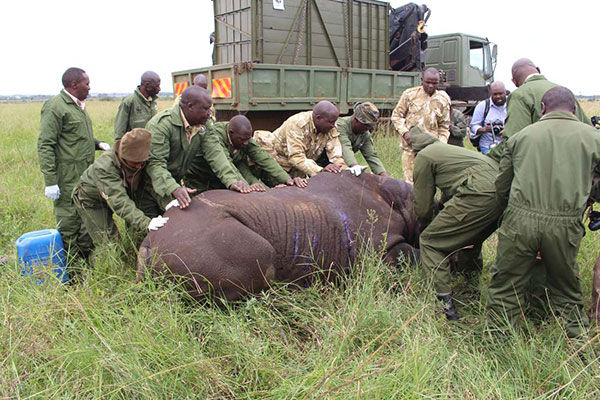
It was to be a landmark event for Kenya more so the Kenya Wildlife Service(KWS), however what was to be a normal translocation procedure of 14 rhinos from Nairobi National Park to Tsavo East National Park turned out to be a disaster and the center of controversy.The translocation exercise was launched by CS Najib Balala at the ivory burning site at Nairobi National park.The exercise was in partnership with World Wide Fund for nature-Kenya. Kenyans on hearing the tragic news took to social media to air out their views on the matter and given the situation comments made about KWS and how they handled the process of translocation were not positive. This caused CS Najib Balala with no option but to establish an independent inquiry team to investigate the circumstances that resulted in the loss of these rhinos. The teams mandate was to establish the circumstances under which the rhinos died after arriving and being released in the Tsavo East National Park.
Before i even go to the details that caused the death of the rhinos lets take a step back and look at some of the reasons why Tsavo East National park was chosen as an ideal location for hosting the newly introduced rhinos. Tsavo East had the highest concentration of rhinos( about 800) before poaching nearly wiped them out. The 2010 census indicates that at the time there were 11 black rhinos so introducing 14 others would relieve stress in other parks, encourage faster breeding and increase black rhino population in Tsavo. KWS reports that Tsavo East has the capacity to hold 55 rhinos. Currently there 15 black rhinos.
The plan for translocation was to transport the rhinos to Tsavo East National Park and once there place them in a holding sanctuary. This is because rhinos are very aggressive and if released immediately they may even run beyond the park. At the holding the rhinos are fed shrubs, there watered and cleaned. The rhinos were kept under 24hr surveillance according to KWS so how the rhinos died under such intense surveillance still remains a mystery.
The inquiry team formed by CS Najib Balala indicated in their report that the cause of death was due to . The team further showed that there was negligence especially in the holding Boma which included poor coordination and communication among officers responsible for the pre-translocation studies that is biomass assessments, environmental impact assessment and water quality assessments. Following the findings the CS took action by suspending:multiple stress syndrome intensified by salt poisoning and complicated by the following conditions; Dehydration, starvation, proliferation of opportunistic bacteria in upper respiratory tract, gastric ulcers and gastritis
Dr. Samuel Kasiki. Deputy Director Biodiversity Research and Monitoring
Poor coordination between various research line departments and its field and poor decision making.
Dr. Francis Gakuya. Head of Veterinary and capture services
Disregarded the checklist for pre-translocation. Failed to advice DG to stop Nakuru rhino translocation. Failed to ensure coordination of veterinary officers in Tsavo.
Dr.Isaac leekolol. Head of capture services.
Improper care of animals at holding Boma.
Dr. Felix Mwangang. The senior warden Tsavo East.
Total disconnect between Tsavo East National Park management and capture operation team at the sanctuary.
Dr. Mohammed Omar. Head of ecological monitoring.
Failed to provide salinity level monitoring.
Mr. Fredrick Odack. Senior scientist Tsavo.
Poor advice and monitoring for all aspects on suitability of the area.
Though suspension of officers will not bring back the dead rhinos it is the first step to ensure that such mistakes are not repeated in the future. Statistics show that there are 735 black rhinos in Kenya, the 3rd highest population globally. This is a decline from 745 in May. This should serve as a wake up call that more still needs to be done and protection of the species should be handled with the utmost care.
Comments